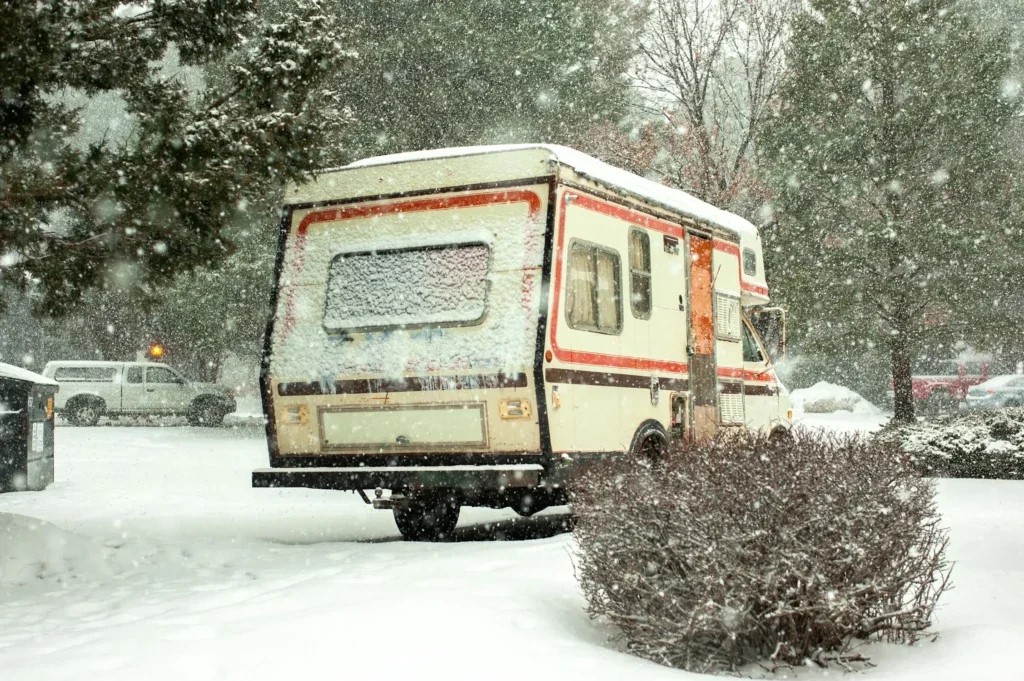
Camper vs. cottage
what to rent for a winter trip to the mountains?
Wróć do listyA winter trip to the mountains is always a special experience. Snow-capped peaks, frosty mornings and hot tea with a view of picturesque forests – these are moments you remember for a long time. But what should you rent for such a getaway: a camper or a cosy mountain cottage? And it's not just a decision about where to sleep. It's a choice between two completely different styles of winter holiday.
On the one hand, there's the freedom of a camper: the chance to change plans on a whim and wake up somewhere new every time. On the other, a comfortable year-round cottage that gives you a solid base and total relaxation after an active day. The Sudetes in winter can be full of surprises, so let's consider which works better for a winter mountain stay – a camper or a cottage.
Sleeping in a camper vs. staying in a cottage – the differences
Before we get into the details, it's worth understanding the basic differences between these two types of accommodation. A camper tempts you with freedom – the freedom to move around. After all, it's a home on wheels that you can park in different places (in line with the rules and common sense, of course).
A comfortable mountain cottage is a fixed base with full facilities, where every square metre has been designed with guests' comfort in mind. For beginners it may sound like a choice between adventure and comfort, but the reality is much more interesting.
Camper vs. cottage – where will it be warmer?
Winter trips have their own rules, and temperature is one of the key issues. In the mountains the thermometer can show truly impressive sub-zero readings. In a well-insulated year-round cottage keeping a pleasant temperature is no problem at all. Modern heating systems run reliably. Thick walls and well-designed insulation keep the cold out, so even during biting frosts it's pleasantly warm inside.
A camper is a different story. Even with a parking heater (a system that works while you're stationary), it can struggle to maintain a steady temperature. Energy consumption is much higher, and every time you go in or out you quickly lose precious heat. That doesn't mean you have to freeze in a camper – it simply takes more attention and preparation.
Everyday life – space matters
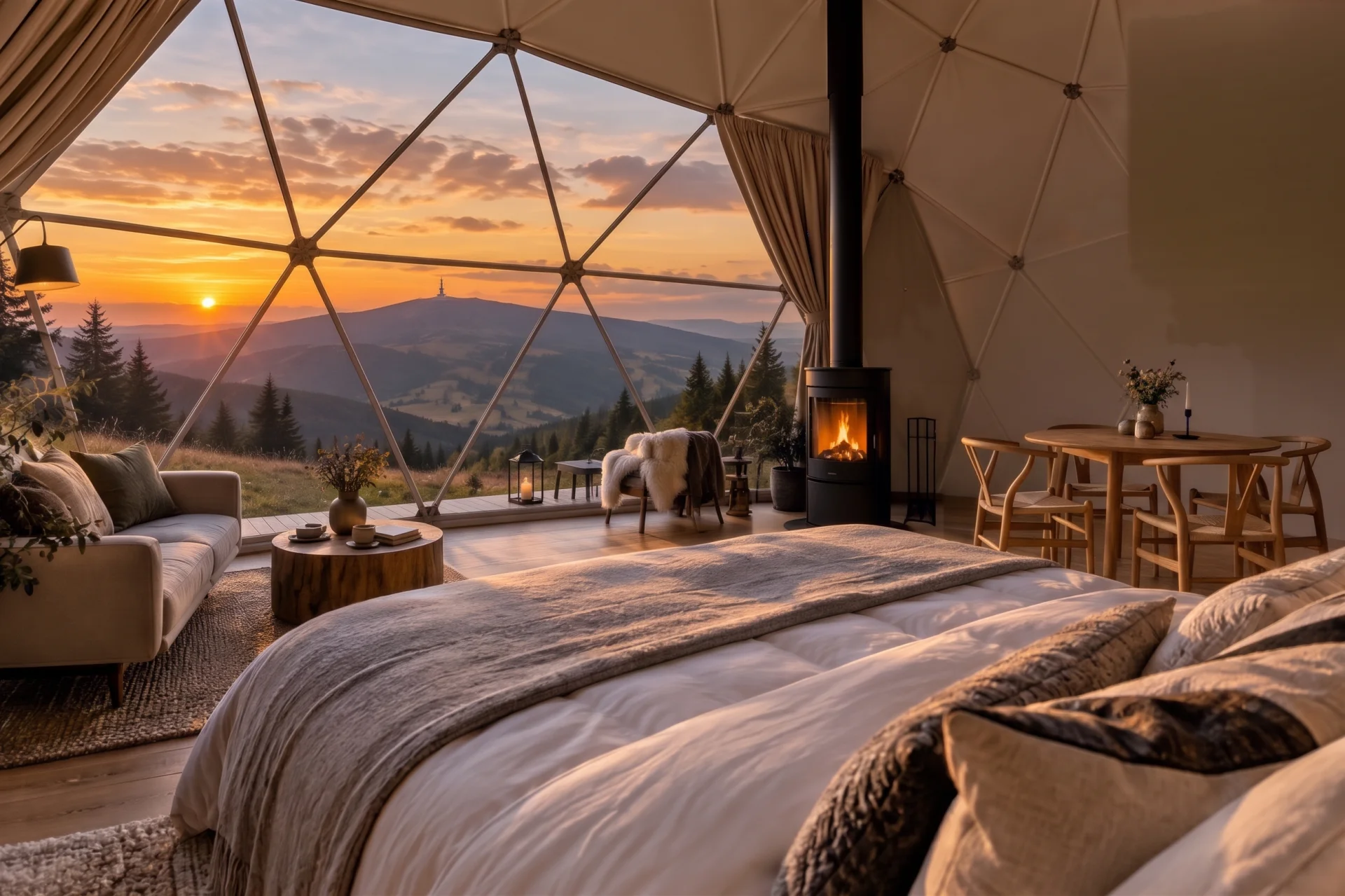
A year-round cottage is above all about space and comfort. In the living room with large windows you can admire the mountain views while relaxing or cooking in the well-equipped kitchen. A separate bedroom ensures a comfortable night's sleep, and a spacious bathroom makes it easy to get ready for a day full of activity. These basic comforts become especially important when you come back chilled from a winter trail or the slopes.
In a camper, space is limited but usually very cleverly organised. Every centimetre is put to good use. In winter, however, there's an extra challenge – where do you dry wet jackets, ski trousers and boots? A cottage has a dedicated spot for that; in a camper you need to get creative. It's worth thinking about before you decide to rent one.
Mountain reality – practical challenges
Winter in the mountains can surprise even experienced travellers. In a cottage, most potential problems are already solved. The plumbing is protected against frost, the Internet works reliably, and snowdrifts won't leave you stranded. You can also count on the hosts, who know the local conditions and are happy to give advice.
A camper needs much more attention. Water tanks can freeze, the battery drains faster at low temperatures, and finding an open campsite in Poland in winter can be a real challenge. Then there's the heating – gas consumption is much higher than in summer, so you'll need to refill more often.
Up or down? Camper vs. cottage costs
At first glance, a camper may seem like the cheaper option. But the winter maths is more complicated. The rental itself is only the beginning – you need to add much higher heating costs, campsite fees with electric hook-up, higher fuel consumption in mountain terrain and possibly extra winter insurance.
A cottage may seem more expensive at the outset, but all utilities and a parking space are often included in the price, and you don't have to worry about unexpected expenses. On top of that, there's peace of mind – you don't have to keep checking the gas level or the battery.
After skiing – evenings in a cottage or in a camper?
There's something magical about the atmosphere of mountain settlements. Cottages often form small, friendly communities where you can meet around a shared campfire in the evening, swap stories from the trails or simply enjoy good mountain company. That's an added value you can't put a price on.
A camper offers more privacy and independence, but it can also mean a certain isolation. Of course, for some that's an advantage – sometimes that's exactly what we need on a winter getaway to recharge our batteries far from the hustle and bustle.
Driving a camper in the mountains in winter – the essentials
Driving a camper on mountain roads in winter is a big challenge, even for experienced drivers. Slippery surfaces, steep climbs and unpredictable weather call for extra caution. Above all, make sure your vehicle is properly prepared. Winter tyres are the absolute minimum, and snow chains on the drive wheels may prove essential.
In the Śnieżnik Massif many roads are narrow and winding, and during heavy snowfall some may be temporarily impassable. That's why in winter it's better to plan no more than 1-2 stops instead of frequently changing location. Choose main, snow-cleared roads and keep an eye on traffic updates. Avoid risky manoeuvres, especially on icy climbs – turning around or reversing a 7-metre camper in such conditions can be genuinely dangerous.
Also remember that not all car parks are open in winter, and some forest roads or mountain passes may be closed. Safety first! Sometimes it's better to give up ambitious plans and stay longer in a proven spot than to take risks in difficult conditions.
Who is a camper for, and who is a cottage for?
A camper is a good fit for:
- people who like frequent changes of scenery
- experienced travellers
- good drivers who have already done winter trips in a larger vehicle
- small groups (2-3 people)
- fans of a minimalist lifestyle
A cottage, on the other hand, is a better choice for:
- families with children
- people who value comfort and space
- winter travel beginners
- groups of friends
- people planning a longer stay in one place
Camper vs. cottage – what else is worth knowing?
Whatever you choose, a winter trip to the mountains requires good preparation. It's worth keeping an eye on the weather forecast, having a backup plan and the right gear. With a cottage, you know a warm haven is waiting for you. With a camper, you need to be ready for various scenarios and more self-reliance.
It's also worth remembering that there's no one-size-fits-all right choice. It all depends on how you like to holiday, how much travel experience you have and what you expect from your time in the mountains in winter. But one thing is certain – whether from a cosy cottage or a camper, the view of the snow-capped peaks will take your breath away. And maybe that's what matters most in this whole mountain adventure?
Zainspirowany?
Zarezerwuj pobyt w naszym obiekcie i doświadcz tego na własnej skórze.