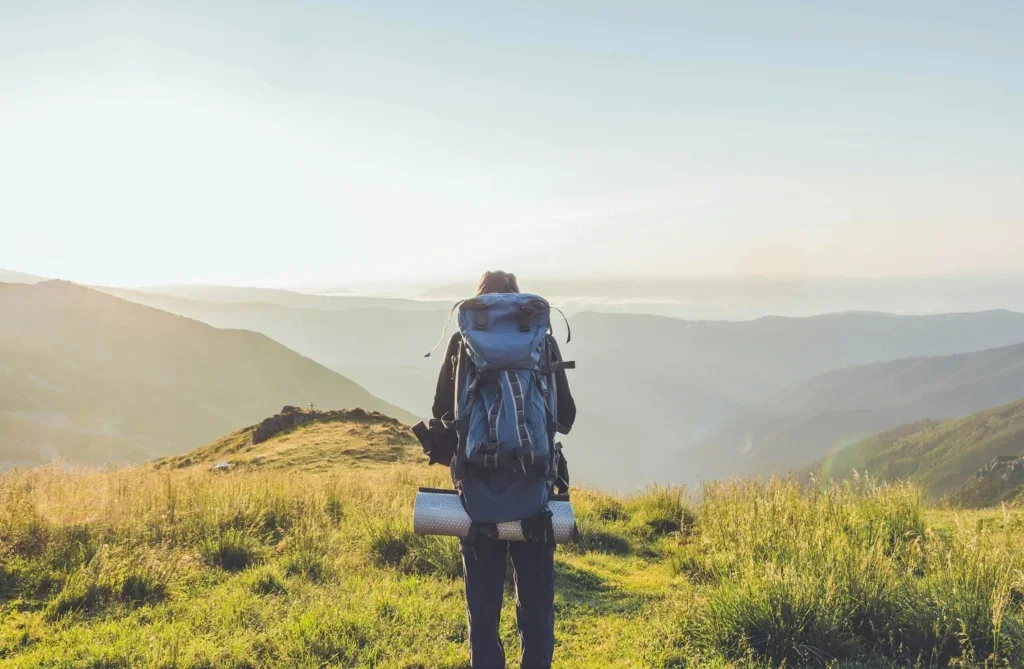
Trekking – just walking in the mountains? It's much more than an ordinary mountain hike! Imagine crossing wild trails, tackling steep slopes, with a tent pitched under a starry sky as your home for several days. Sounds intriguing? That's the essence of trekking!
In this article you'll find out how this activity differs from ordinary hiking. You'll learn about the types of trekking – from mountain to polar – its benefits and tips for a good start. Whether you're an experienced hiker looking for new challenges or a beginner keen on mountain walks, you're sure to find something for yourself here.
What exactly is trekking?
According to the official definition in the PWN Polish Language Dictionary, trekking (from the English trek – a journey on foot) is "a hiking expedition to an exotic, difficult and inaccessible region". But what does that mean in practice?
Trekking is not an ordinary walk in the park! It's a full-scale adventure combining elements of hiking, climbing and exploring wild terrain. This kind of activity requires not only physical strength but also mental resilience.
It's usually a long or multi-day hike in demanding terrain and often in difficult climatic conditions. It might be crossing a desert, walking on a glacier or pushing through dense jungle. Characteristically for trekking, routes can lie off the beaten track, in remote places. Trekkers (people who go trekking) often sleep in tents and carry all their gear with them, which requires not only the right equipment but also solid physical preparation.
The history of trekking
Although people have been walking in the mountains for thousands of years, trekking as a form of tourism was born relatively recently. Its "father" is considered to be British colonel Jimmy Roberts, a legendary Himalayan mountaineer and explorer. Roberts, who in 1953 made the first ascent of the six-thousander Mera Peak, founded the trekking agency Mountain Travel Nepalin 1964. Roberts's agency also organised expeditions for people with no mountain hiking experience, which opened up the world of high mountains to a wider public. It's from the 1950s that we can speak of trekking as a popular form of tourist activity.
Today trekking is not only a way to spend time actively but also a philosophy of travel. It's a chance to connect deeply with nature, test your own limits and a unique opportunity to discover the wildest corners of our planet.
Trekking vs ordinary hiking
How does trekking differ from an ordinary trip to the mountains? Above all in length and intensity. Trekking is usually a multi-day expeditioncovering dozens of kilometres over varied terrain. It requires better physical and mental preparation than a short walk along a mountain trail.
Trekking often involves spending the night on the trail – whether in mountain huts, in tents or under the open sky. What's more, trekking routes often lead through less frequented, wilder areas. This gives you a chance to encounter wildlife and observe rare species of plants and animals.
The most popular types of trekking
- Mountain (classic) trekking– the classic of the genre! A so-called long walk on routes of varying difficulty (hiking) with elements of climbing.
- Desert trekking – for those seeking extreme experiences. Desert hikes are a real test of endurance and resource management skills. High daytime temperatures, cold nights, limited access to water – all this means this type of trekking requires excellent preparation and experience.
- Trekking in dense tropical forests – a real challenge for the senses and fitness. Only for the brave, given the high humidity, the risk of encountering dangerous animals or insects and the difficulty of finding your way in thick forest.
- Polar trekking, i.e. expeditions in Arctic and Antarctic regions. An extreme experience requiring specialist equipment and preparation. Reserved for the most experienced and well-equipped adventurers.
- River trekking– combining hiking with tackling stretches of river to explore hard-to-reach canyons or river valleys. Trekkers must be prepared for constant dampness, changeable weather and the need to carry waterproof gear.
- Bike trekking – for those who want to combine a passion for two wheels with exploring wild terrain. It's a demanding form of trekking that combines elements of mountain biking (on special bikes with 28" or 29" tyres) with longer, multi-day expeditions. Participants must be ready to tackle difficult, often unpaved routes and deal with any breakdowns far from civilisation.
The benefits of trekking
Accessibility and low start-up costs
Trekking is one of the most accessible outdoor activities. You don't need expensive gear to start – comfortable shoes, a backpack and basic equipment will do. You can start with short routes near where you live, gradually increasing distance and difficulty.
A comprehensive full-body workout
Trekking engages practically all muscle groups. It's a great way to improve your overall fitness and strengthen your leg, back and abdominal muscles. Regular hikes also help maintain a healthy weight and improve cardiovascular and respiratory fitness.
Can be tailored to your needs
You can go trekking at different paces and at different levels of difficulty. You can easily adjust the intensity to your current fitness and goals. It's an ideal activity for beginners and advanced athletes alike.
Better mental health
Regular trekking helps reduce stress and improves sleep quality. Physical activity in the fresh air stimulates the production of endorphins, which leads to better wellbeing and fewer symptoms of depression or anxiety.
Developing practical skills
Trekking teaches many useful skills, such as map reading, navigation, survival basics and route planning. These skills can come in handy not only on hikes but also in everyday life.
Savings on transport and accommodation
By choosing trekking as a way to spend your free time, you can save on transport costs and expensive accommodation. Many trekking routes start close to towns and villages, and staying in year-round holiday cottages or at campsites is much cheaper than in hotels.
You can go trekking all year round
Bear in mind, though, that each season brings different attractions and challenges on the trail – from blooming spring meadows and summer mountain hikes to admiring autumn colours and winter snowshoe routes.
How to start your trekking adventure?
Dreaming of trekking but don't know where to start? Don't worry, everyone was a beginner once! We've prepared some tried-and-tested tips for beginnersthat will help you start your trekking adventure safely and enjoyably.
1. Choosing the right route for beginners
To start with, choose easy, well-marked trails. In the Śnieżnik Massif, the area around Stronie Śląskie or Międzygórze is a great place for your first steps. Begin with short day trips, gradually increasing distance and difficulty. What should you keep in mind at the beginning?
- Check the route length and elevation gain – choose routes of up to 10 km with moderate elevation gain.
- Pay attention to trail markings – well-marked routes reduce the risk of getting lost.
- Check whether there are mountain huts or rest spots along the route.
- Choose popular trails – if something goes wrong, it's easier to get help from other hikers.
- Avoid routes that require specialist equipment or skills.
2. Physical and mental preparation
Before you hit the trail, work on your fitness. Regular walks, jogging or cycling will help you prepare for the challenges of trekking. Don't forget stretching either – supple muscles mean a lower risk of injury. At the same time, focus on proper mental preparation:
- Learn the basics of map reading and navigation.
- Get familiar with mountain safety rules.
- Practise packing your backpack and using the gear you'll take with you.
- Work on your patience and perseverance – trekking is not a race!
3. Planning your trip
Plan your route carefully. Check the weather forecast, walking times and accommodation options (if you're planning a longer trip). Tell your loved ones about your plans – it's important for your safety.
Key elements of planning:
- Choose a route suited to your level.
- Check current trail conditions – some routes may be temporarily closed.
- Estimate the walking time and add a time buffer.
- Plan rest stops and places to refill your water.
- Prepare a backup plan – check alternative descent routes.
- Save important phone numbers (GOPR: 985 or 601 100 300, or mountain huts along the route).
4. Equipment and accommodation while trekking
Don't forget the right equipment, suited to the type of trekking. You'll find a list of useful things to take on a classic summer trek in our article: What to take to the mountains in summer? Get ready with us! Also remember about accommodation. If you're going on a multi-day trek, a good base is accommodation at the foot of the mountainyou plan to explore. In that case you'll also need to arrange somewhere to sleep during the trek – in a tent or in mountain huts along your route.
Zainspirowany?
Zarezerwuj pobyt w naszym obiekcie i doświadcz tego na własnej skórze.